
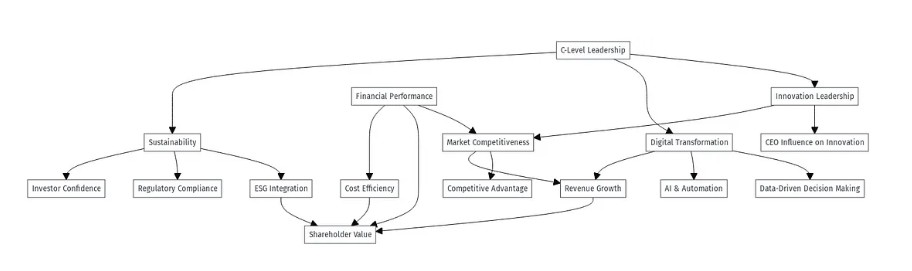
Despite record-breaking investments in innovation, many companies find themselves stagnating. The reason? Innovation leadership is losing influence. The C-Level Study 2024, conducted by the Institute for Transformative Innovation Research (ITIR) at the University of Pavia, reveals structural inefficiencies in leadership, exposing weaknesses in innovation management, digital transformation alignment, and sustainability integration. These challenges are no longer operational inefficiencies but direct threats to financial performance, competitive advantage, and shareholder value. To remain relevant, companies must reimagine leadership, embed digital transformation into business growth, and make sustainability a revenue driver rather than a compliance checkbox.
The Declining Influence of Innovation Leadership
Innovation remains a stated corporate priority, yet Chief Innovation Officers (CInOs) are losing their ability to drive meaningful change. In 2019, 72.46% of CInOs reported directly to the CEO, providing them with strategic influence. However, by 2023, this figure had fallen to 55.33%, signaling a growing disconnect between innovation leadership and executive decision-making (Denicolai, 2024). Additionally, 73.4% of managers struggle to influence corporate culture, indicating that innovation initiatives are often isolated rather than embedded into core operations.
Many innovation leaders face severe structural limitations, with 55.22% not reporting directly to the CEO and only 26.71% managing teams larger than 30 people (Buratti, 2025). This marginalization results in innovation being treated as a secondary function, rather than a driver of business transformation. McKinsey research has consistently shown that companies that integrate innovation into core business strategies achieve 40% higher revenue growth than those that treat it as an isolated function (McKinsey & Company, 2023). Without high-level backing, even the most forward-thinking innovation strategies risk being deprioritized or underfunded.
Companies that sideline innovation leadership are already seeing the consequences: slower product cycles, declining market share, and stagnating revenue growth. The message is clear — innovation must be a boardroom function, not a back-office experiment.
…
You can read the complete version of the article on Medium. https://medium.com/@tarifabeach/strategic-challenges-in-c-level-leadership-innovation-digital-transformation-and-sustainability-ae5794e4a958
This content is also part of the 1:1 Executive Coaching session—book your call today to apply these insights directly to your business
0 comments
Here is no comments for now.