

Executive Summary
At Waves ’25 in Munich, automation platform Make unveiled a new era of visual orchestration - a framework that redefines how enterprises design, govern, and scale AI. Born from Celonis’s 2020 acquisition of Integromat, Make has evolved from a workflow connector into a strategic orchestration layer within the execution-management ecosystem. With $52.6 million in revenue and Celonis’s debut at №3 on the 2025 Fortune Future 50 list, Make exemplifies Europe’s ambition to fuse automation with accountability.
This article examines Make’s transformation from startup to orchestration hub, analyzes its latest AI innovations - including Maia by Make, AI Agents, and the Model Context Protocol (MCP) - and situates them within a broader shift toward agentic AI. Drawing on Martino Agostini’s Medium essays, it argues that Make’s architecture reflects a new strategic paradigm: governable intelligence - where transparency, interoperability, and foresight define the future of automation.

1. Strategy and Origins: From Integromat to Make to Celonis
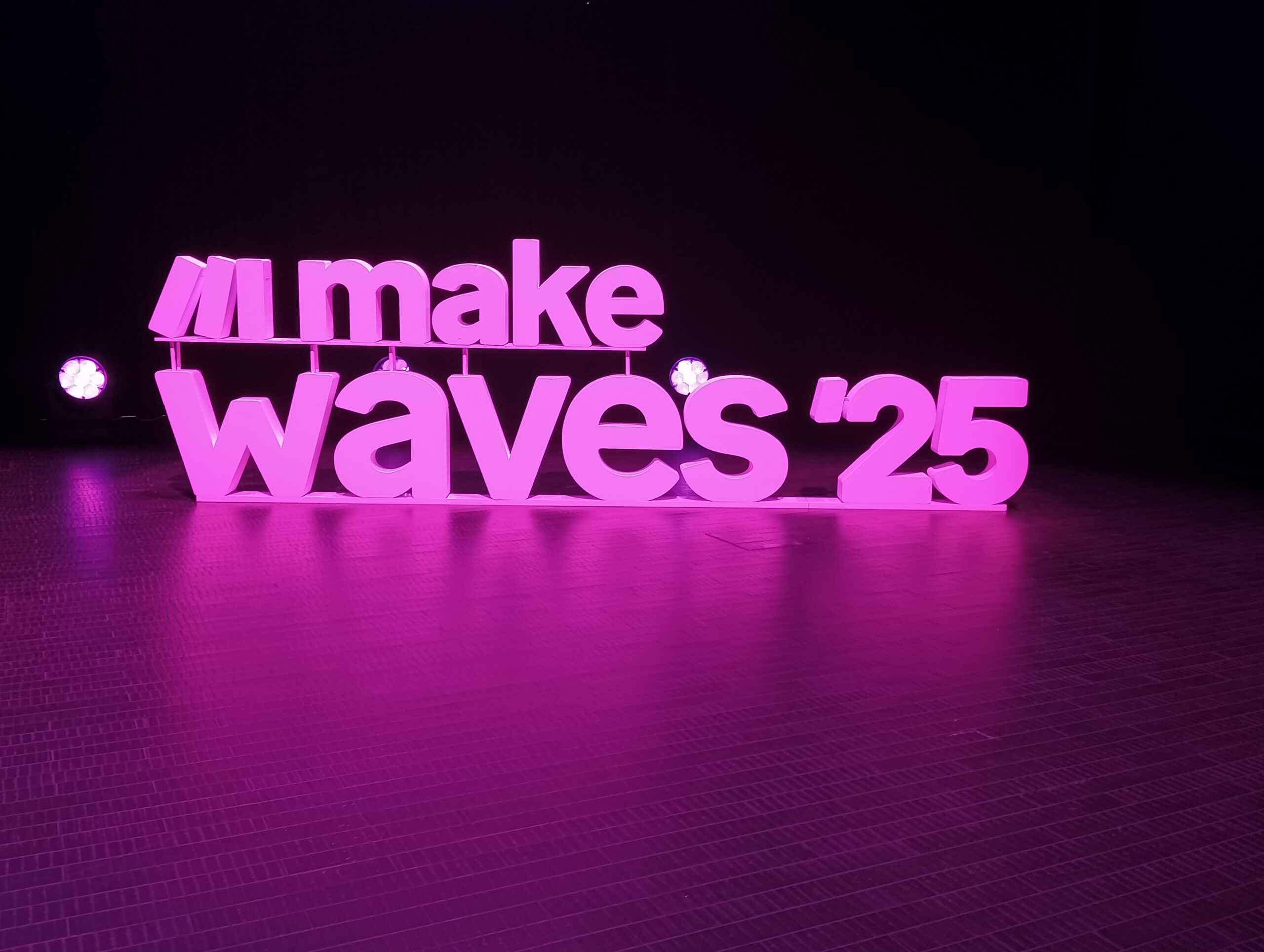
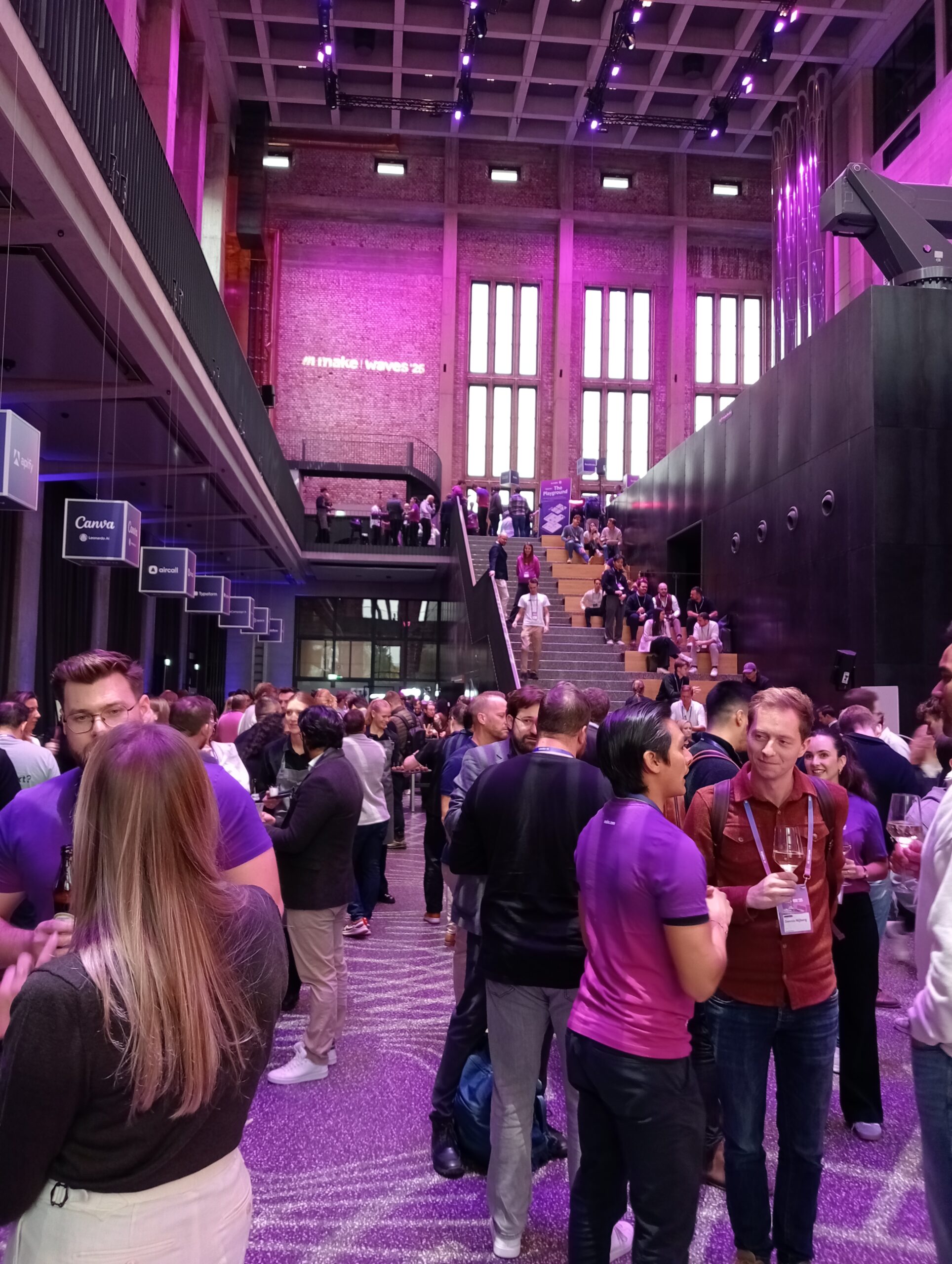
In the industrial-chic setting of Munich’s Bergson Kunstkraftwerk, more than seven hundred innovators and digital leaders convened for Waves ’25, Make’s flagship automation and AI conference. The event, spanning two days, showcased not only product innovation but also Europe’s emerging advantage in building transparent and orchestrated intelligence infrastructures.
Make’s journey began in Prague as Integromat, a visual integration platform allowing users to automate workflows across thousands of applications. In October 2020, Celonis, the German leader in execution management, acquired Integromat for over $100 million, aiming to bridge process analytics with automated action (TechCrunch, 2020; Reuters, 2020).
“Automation is the missing piece that turns insight into impact,” said Celonis CEO Alex Rinke. “With Integromat - now Make - we’re closing that loop.”
By February 2022, the company was officially rebranded as Make, marking its evolution from workflow connector to orchestration platform (0hands, 2020). The rebrand coincided with Europe’s push toward responsible AI under the Digital Decade 2030 and the EU AI Act, which emphasized transparency, governance, and data sovereignty (Politico, 2022; The Economist, 2021).
The results have been significant. According to GetLatka (2025), Make achieved $52.6 million in annual revenue with a 478-person team, nearly doubling its 2024 performance (Tracxn, 2024). Parent company Celonis meanwhile debuted at №3 on Fortune’s 2025 Future 50 list, recognized for its innovation capacity and long-term strategic positioning (Celonis, 2025). Together, these outcomes validated Celonis’s integration thesis: when data analytics and automation converge, organizations gain not just efficiency, but adaptability and foresight.
2. Product and Vision: The Age of Visual Orchestration
At Waves ’25, Anton Danilov, Make’s Vice President of Product, framed the company’s new direction in a single phrase: visual orchestration.
“What we unveiled isn’t just a set of features,” Danilov told attendees. “It’s a new way of thinking about and working with AI and automation.” (Make, 2025a)
This approach is structured around three interconnected pillars - Build, Accelerate, and Scale - representing a shift from automation-as-utility to automation-as-intelligence.
Build democratizes creation. Through Maia by Make, a conversational AI that transforms natural language into working automations, users can build complex workflows without technical expertise. Complementary features like Scenario Run Replay and Make Code streamline testing, debugging, and scripting directly within the platform (Make, 2025b–c).
Accelerate deepens intelligence. The introduction of AI Agents and a curated Agent Library expands automation capabilities, while the Make AI Provider enables organizations to integrate large language models natively - without external API dependencies (Make, 2025d–e).
Scale delivers control and transparency. With Make Grid, enterprises can visualize their automation ecosystems in real time, while the Model Context Protocol (MCP) ensures secure, standardized communication between AI systems - bridging interoperability and governance (Make, 2025f–g).
Throughout the event, these advances were explored through live demonstrations, technical workshops, and collaborative sessions. The Current offered deep-dive training for power users, while The Playground provided hands-on experimentation with new features. Partner companies - including Webflow, Canva, Meta, and Vercel - joined Make’s leadership team on stage to discuss the next frontier of intelligent collaboration. Partner recognition awards honored MakeItFuture, Globant, Monday.com, and LinkedIn, underscoring the role of ecosystem partnerships in accelerating innovation (Make, 2025h).
3. Implications and Future: Agentic AI and Europe’s Digital Edge
The real story of Waves ’25 lies not only in what Make released, but in what it represents: a turning point in how AI systems coordinate and execute intent.
In “Agentic AI Needs a Nervous System”, I argued that autonomy without orchestration leads to chaos - intelligence requires structure, and cognition requires flow (Agostini, 2025a). Make’s unveiling of AI Agents, MCP, and Make Grid gave that theory operational form, transforming automation into a nervous system capable of synchronizing reasoning and action across an enterprise. But as I expanded in “AI Agents at a Crossroads”, protocols alone are insufficient; coordination mechanisms must evolve alongside interpretability, governance, and economic incentives (Agostini, 2025b). Similarly, “The Protocol Dilemma” highlights how competing standards - MCP, A2A, ACP, and ANP - and pricing models will define the economics of the agentic economy (Agostini, 2025c).
Viewed together, these insights reveal why Make’s 2025 architecture matters. The Celonis–Make ecosystem now forms a closed execution loop: Celonis identifies inefficiencies through process mining; Make resolves them autonomously through orchestrated AI. This model exemplifies what Europe does best - embedding trust, explainability, and governance into innovation.
The implications extend far beyond the enterprise. As Celonis’s Fortune Future 50 ranking and Make’s revenue growth demonstrate, ethical orchestration can be both economically viable and globally competitive (Celonis, 2025; GetLatka, 2025). In a world where the U.S. dominates model development and Asia leads in applied AI, Europe’s emerging edge may lie in governable intelligence - systems that are interpretable by design, compliant by default, and human-aligned by principle.
A special word of appreciation goes to the Make community - the Makers - whose creativity, curiosity, and collaboration are the true driving force behind this remarkable company. I’m deeply proud to be part of such an inspiring ecosystem that keeps pushing the boundaries of what intelligent automation can achieve.
As the final lights dimmed at Bergson Kunstkraftwerk, one message captured the moment:“See you next year at Waves ’26 - where ideas don’t just run; they flow.”
References
Agostini, M. (2025a). Agentic AI Needs a Nervous System: n8n, Make, and Zapier Are Building It. Medium. https://medium.com/@tarifabeach/agentic-ai-needs-a-nervous-system-n8n-make-and-zapier-are-building-it-4fe8f8ff9b3c
Agostini, M. (2025b). AI Agents at a Crossroads: Why Protocols Like MCP Are Necessary - But Not Enough. Medium. https://medium.com/@tarifabeach/ai-agents-at-a-crossroads-why-protocols-like-mcp-are-necessary-but-not-enough-33ee184f225b
Agostini, M. (2025c). The Protocol Dilemma: Why MCP, A2A, ACP, and ANP - and AI’s Pricing Paradox - Will Define the Agent Economy. Medium. https://medium.com/@tarifabeach/the-protocol-dilemma-why-mcp-a2a-acp-and-anp-and-ais-pricing-paradox-will-define-the-2e1c71ccafda
Celonis. (2025, Sept 15). Celonis Debuts at №3 on the 2025 Fortune Future 50 List. https://www.celonis.com/news/press/celonis-debuts-at-no-3-on-the-2025-fortune-future-50-list
GetLatka. (2025). How Make hit $52.6 M revenue with a 478-person team in 2025. https://getlatka.com/companies/make.com
0hands. (2020). Celonis Acquisition of Make: Significance for Automation. https://www.0hands.com/make-celonis-acquisition
TechCrunch. (2020, Oct 14). Celonis acquires Czech startup Integromat to accelerate automation. https://techcrunch.com/2020/10/14/celonis-acquires-czech-startup-integromat-to-accelerate-automation
Reuters. (2020, Oct 14). Process miner Celonis buys Integromat, launches new automation capabilities. https://www.reuters.com/article/celonis-integromat-idUSKBN26Z2XK
Tracxn. (2024). Make - Financials. https://www.tracxn.com/d/companies/make/__goblLB6Svzom9RNvXuqdn_VrOTsml5MUXUV7RVMuzRE
Politico. (2022). Europe’s Automation Boom: Why Process Mining and AI Are Converging.
The Economist. (2021). The Next Layer of Productivity: Automation Platforms Are Changing Business.
Make. (2025a–h). Waves ’25 Official Agenda and Product Announcements. https://www.make.com/en/waves
0 comments
Here is no comments for now.