

This note explores the intricate relationship between corporate governance, IT governance, and blockchain governance, highlighting their differences and identifying areas of symbiotic collaboration. While each form of governance addresses distinct challenges, the convergence of these domains holds the potential to enhance overall organizational effectiveness, transparency, and security. This research investigates the boundaries and intersections of these governance paradigms, aiming to provide insights for organizations seeking to navigate the evolving landscape of digital governance.
In the rapidly evolving landscape of digital governance, three distinct yet interconnected domains have gained prominence: corporate governance, IT governance, and blockchain governance. Each of these governance paradigms addresses specific challenges and concerns within organizations. This article aims to delineate the boundaries of corporate governance, IT governance, and blockchain governance while identifying opportunities for collaboration and synergy among these domains.
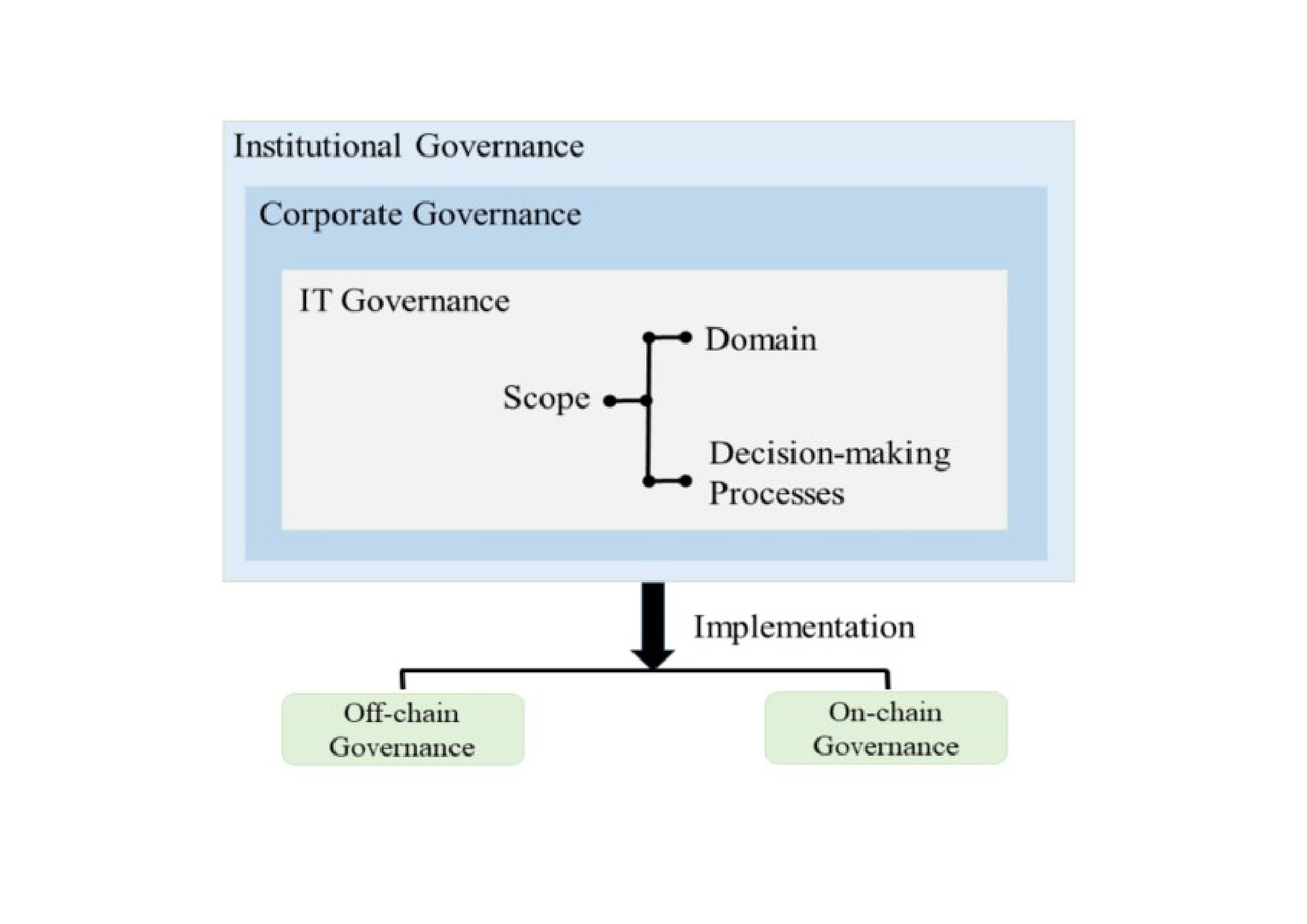
Source : Blockchain Governance: An Overview and Prediction of Optimal Strategies using Nash Equilibrium
Corporate Governance: Corporate governance encompasses the principles, processes, and structures by which an organization is directed, controlled, and held accountable to its stakeholders. It primarily focuses on the relationship between a company’s management, its board of directors, shareholders, and other stakeholders. Key aspects of corporate governance include:
-Board Oversight: The board of directors plays a central role in decision-making, strategy, and oversight.
– Shareholder Rights: Protecting shareholders’ rights and ensuring transparency in financial reporting.
– Ethical Practices: Promoting ethical behavior and compliance with laws and regulations.
IT Governance: IT governance is a subset of corporate governance that specifically addresses the management of information technology resources and their alignment with business goals. It encompasses the processes, structures, and policies that ensure IT investments deliver value and support the organization’s objectives. Key aspects of IT governance include:
– IT Strategy: Aligning IT strategy with overall business strategy to drive innovation and competitiveness.
– Risk Management: Identifying and mitigating IT-related risks, including cybersecurity threats.
– Compliance: Ensuring compliance with IT-related regulations and standards.
Blockchain Governance: Blockchain governance pertains to the management and regulation of blockchain networks and ecosystems. It focuses on the decentralized nature of blockchain technology and aims to establish rules, consensus mechanisms, and decision-making processes within blockchain communities. Key aspects of blockchain governance include:
– Consensus Mechanisms: Determining how network participants agree on the validity of transactions (e.g., Proof of Work or Proof of Stake).
– Protocol Upgrades: Managing changes and upgrades to the blockchain protocol.
– Community Engagement:Involving stakeholders in decision-making and network governance.
Differences and Overlaps: While these governance domains have distinct areas of focus, they intersect in various ways:
– IT Governance and Blockchain Governance: IT governance includes considerations for blockchain technology when it is part of an organization’s IT infrastructure. Managing blockchain nodes, ensuring data integrity, and addressing blockchain-related risks fall under IT governance.
– Corporate Governance and Blockchain Governance: Corporate governance may encompass decisions related to blockchain investments, partnerships, or strategic adoption. Boards may need to understand the implications of blockchain technology for the organization.
– Corporate Governance and IT Governance: IT governance is a subset of corporate governance, with a focus on technology-related aspects. Blockchain adoption within an organization is a specific area where corporate and IT governance converge.
Symbiotic Opportunities: Organizations can harness the synergy between these governance paradigms:
– Enhanced Transparency: Blockchain’s transparent and immutable nature can enhance transparency and accountability in corporate governance.
– Security Integration: IT governance can incorporate blockchain-based security measures to protect critical data and assets.
– Strategic Alignment: Corporate governance can ensure that blockchain adoption aligns with the organization’s strategic goals and ethical principles.
Conclusion: The intricate relationship between corporate governance, IT governance, and blockchain governance highlights the need for organizations to navigate these domains effectively. Recognizing the differences, overlaps, and symbiotic opportunities among these governance paradigms is essential for harnessing the full potential of digital governance in today’s dynamic business environment.
0 comments
Here is no comments for now.